Designing a Home Sports Memorabilia Room
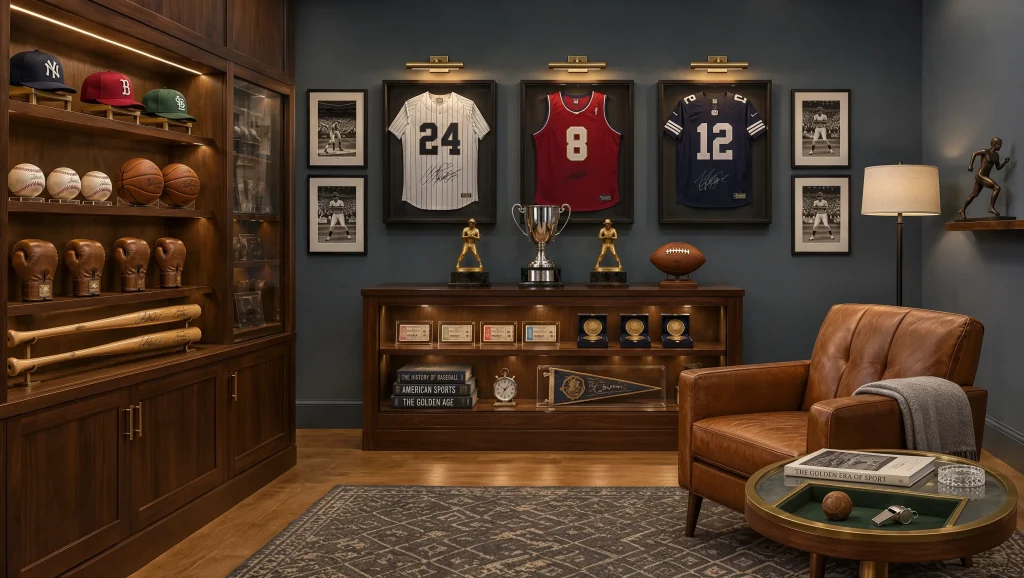
Signed jerseys, championship trophies, vintage trading cards, and historic photographs deserve more than crowded shelves. With thoughtful planning, you can transform an ordinary room into a personal gallery that celebrates sporting achievements while complementing your home’s interior design. The secret is balancing visual appeal, comfort, and proper preservation.
A Sports Memorabilia Room requires more than attractive cabinets or team-colored walls. You need an efficient layout, suitable lighting, protective materials, and space for future acquisitions. How can you create an impressive display that protects your favorite collectibles for years to come?
Planning Your Memorabilia Room
Before purchasing furniture, evaluate your available space, collection size, and storage requirements. A spare bedroom, finished basement, or unused study can become a dedicated display area when planned carefully. Consider how the room will support both collection viewing and everyday activities.
Choosing a Suitable Room Layout
Measure the room and identify windows, electrical outlets, doors, and potential moisture problems. Arrange prominent displays along visible walls while maintaining comfortable walking paths. For smaller homes, vertical shelving and wall-mounted cabinets maximize storage without sacrificing floor space.
Organizing Sports Collectibles
Group memorabilia by sport, team, athlete, or historical period. Display related items together to create a compelling visual narrative. Store additional pieces in labeled archival boxes and maintain a digital inventory containing photographs, purchase receipts, and authentication records.
Protecting Valuable Memorabilia
Sunlight, excessive heat, fluctuating humidity, and unsuitable storage materials can damage collectibles. Use protective display cases, UV-filtering glazing where appropriate, and lockable cabinets for valuable items. The Smithsonian Institution’s preservation guidance emphasizes suitable environmental conditions and preventive care for collection materials.
Creating a Collectible Display Design
Effective Collectible Display Design combines visual balance, appropriate materials, and easy access. Instead of displaying everything simultaneously, prioritize significant pieces and arrange them to create a cohesive exhibition that reflects your personal sporting interests.
Display Cases and Wall Shelves
Choose deep cabinets for helmets and basketballs, and narrower shelves for medals, trading cards, and miniature models. Secure heavy shelves properly and select display materials compatible with your collectibles.
Consider creating a chronological wall that connects a team’s early achievements with its modern victories. This simple arrangement transforms separate objects into a visual timeline that encourages visitors to explore your collection.
Lighting for Jerseys and Trophies
LED fixtures can highlight jersey textures, trophy surfaces, and signatures while producing relatively little heat. Position lights to reduce reflections and avoid prolonged exposure to intense illumination. UV-filtering materials help reduce certain harmful exposures but cannot eliminate all light-related deterioration.
Framing Photos and Signed Items
Use acid-free backing, suitable mounting materials, and protective glazing for signed photographs, historic tickets, and newspaper clippings. Keep delicate surfaces from touching the glazing whenever necessary. For valuable autographs, verify authenticity and preserve supporting documentation separately.
Enhancing Your Sports Collection Room
Once your main displays are ready, focus on the atmosphere surrounding them. Coordinated colors, comfortable seating, and regular maintenance can turn a collection room into a welcoming extension of your home rather than simply a storage space.
Adding Team Colors and Decorations
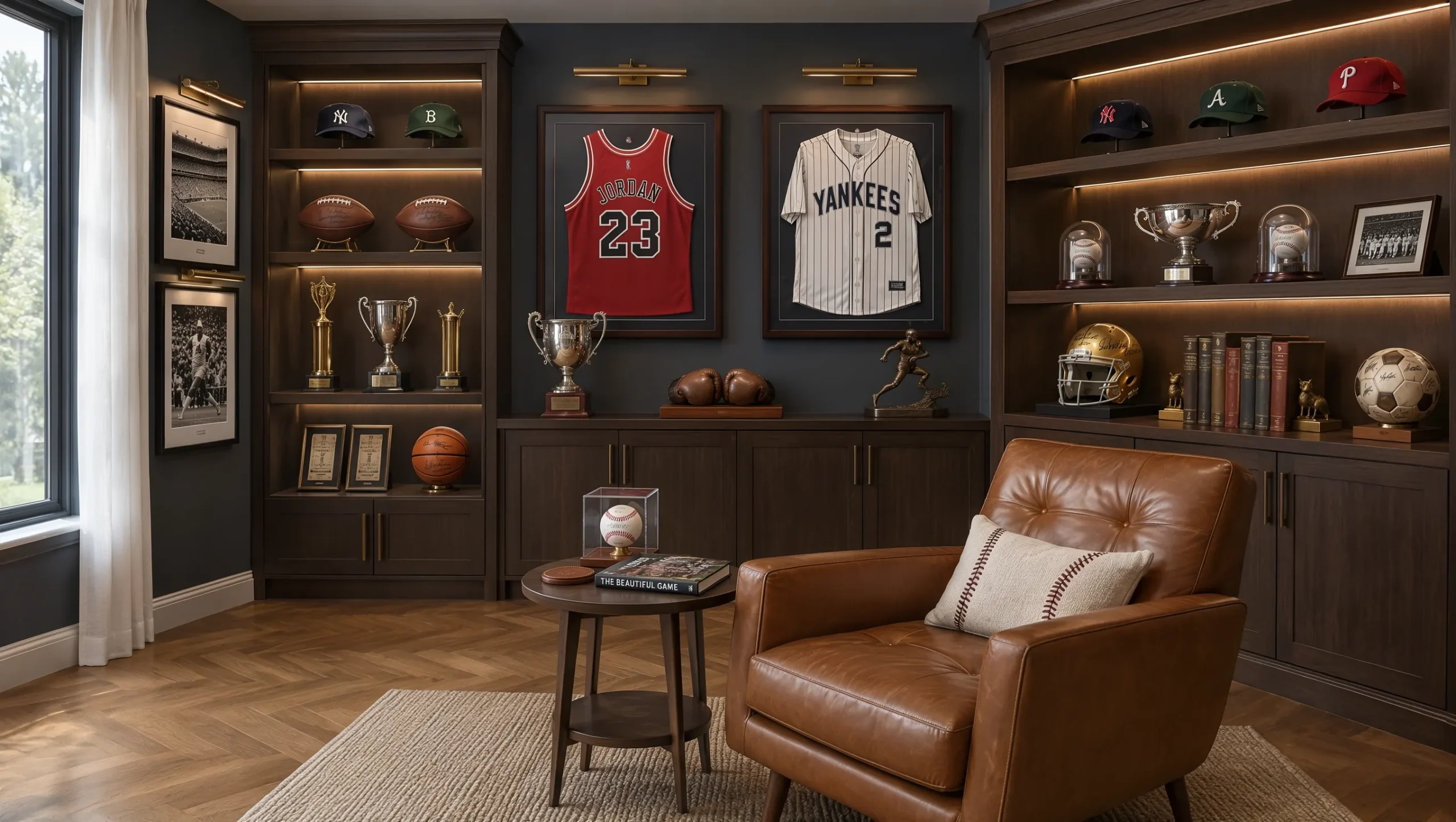
Introduce team colors through accent walls, cushions, rugs, or decorative panels. Neutral backgrounds help colorful memorabilia stand out. Consider adding comfortable seating and a television to create a multifunctional space for watching games and entertaining friends.
Managing Dust and Humidity
Dust can accumulate on exposed objects, while excessive moisture encourages mold and corrosion. Monitor humidity with a digital hygrometer and address leaks or condensation promptly.
A relative humidity level around 40–50% may suit many mixed collections, but individual materials have different requirements. Conservation expert Stefan Michalski, through his work with the Canadian Conservation Institute, emphasizes preventive approaches to reducing risks to collection materials. Seek specialist advice for particularly valuable or fragile items.
Creating Space for New Collectibles
Collections often grow, so leave spare capacity in cabinets and consider modular shelving. Rotate displayed objects occasionally to give overlooked pieces renewed attention.
An empty shelf can be a deliberate design choice, not wasted space. It reserves a place for your next meaningful acquisition while preserving the room’s visual balance.
Create Your Ideal Sports Memorabilia Room
A well-planned Sports Memorabilia Room combines personal memories, practical organization, attractive displays, and responsible preservation. You do not need expensive furniture or an enormous property. Focus on protecting your most valuable pieces, arranging them thoughtfully, and allowing the design to evolve with your collection.
Ready to Showcase Your Sporting Legacy?
Transform your favorite sporting memories into a distinctive feature of your home. Start designing your collection room today and celebrate the sporting moments that matter most to you.