
Managing Burst Pipes in Rental Properties, Burst Pipe Repairs
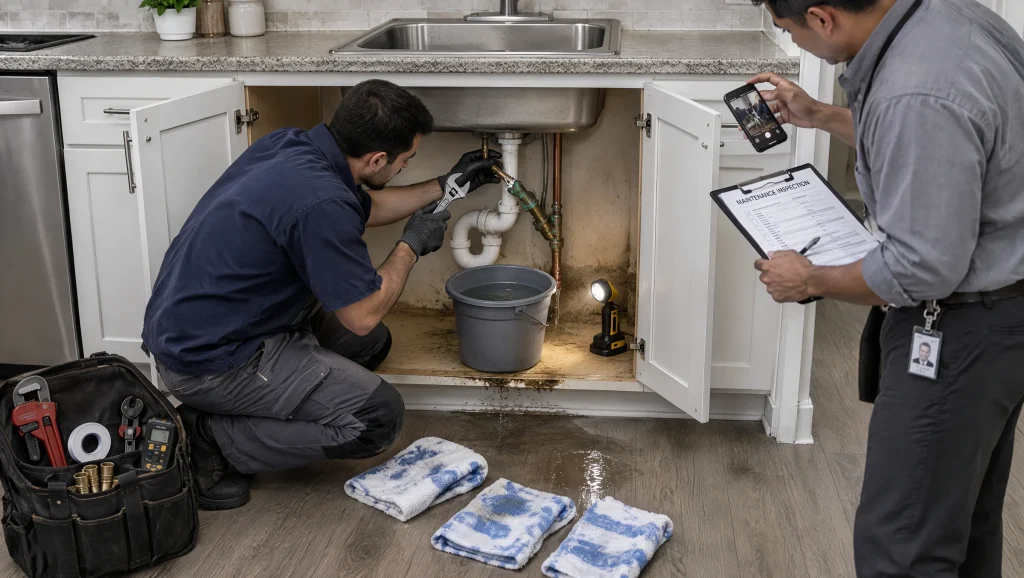
A burst pipe can turn a normal day in a rental property into a stressful emergency. Water may spread across floors, damage furniture, and seep into walls within minutes. Without a quick response, a small plumbing failure can lead to expensive repairs and disrupt tenants’ daily lives.
Effective Burst Pipe Repairs begin with identifying the problem, stopping the water flow, and contacting a qualified plumber. Property managers must also coordinate water damage cleanup, keep tenants informed, and arrange follow-up inspections to prevent further problems.
Signs and Risks of Burst Pipes
Plumbing failures do not always begin with a dramatic flood. Sometimes, unusual water pressure, damp patches, or unexplained increases in water usage indicate a developing problem. Recognizing these warning signs early can help property managers respond before the damage spreads.
Burst Pipes in Rental Homes can affect multiple rooms, neighboring units, and essential building systems. A prompt inspection helps determine the severity of the leak and whether immediate professional assistance is necessary.
Sudden Water Leaks and Low Pressure
A sudden drop in water pressure, unexpected pooling, or water flowing when taps are closed may indicate a damaged pipe. Listen for unusual running-water sounds behind walls or beneath floors. If a major leak is suspected, ask tenants to avoid the affected area and report the issue immediately.
Water Damage to Walls and Floors
Water can soak into drywall, flooring, insulation, and wooden structures, causing swelling, staining, and deterioration. Prolonged moisture can also encourage mold growth. Photograph visible damage for maintenance records, but avoid touching wet electrical equipment or entering areas where structural safety is uncertain.
Causes of Burst Pipes in Rental Homes
Common causes include corrosion, aging plumbing, excessive water pressure, loose connections, and freezing temperatures. Poor installation or accidental damage during renovations can also weaken pipes. Understanding the likely cause helps plumbers recommend suitable repairs rather than addressing only the visible leak.
Responding to Burst Pipe Emergencies
The first priority is to stop the water flow and protect people from immediate hazards. Property managers should establish clear emergency procedures so tenants know whom to contact and what steps they can safely take while waiting for professional help.
A timely Emergency Plumbing Response can reduce water loss and limit damage to the property. However, safety must come first, electrical hazards, contaminated water, or significant flooding may require emergency services or specialist assistance.
Shutting Off the Main Water Supply
If it is safe and accessible, instruct tenants to turn off the property’s main water valve. In multi-unit buildings, confirm which valve serves the affected unit before shutting off shared supplies. Never enter a flooded area if water may have reached electrical outlets or equipment.
Emergency Plumbing Response
Contact a qualified emergency plumber and provide details about the leak’s location, severity, and any visible hazards. Share access instructions and inform affected tenants about the expected arrival time. If the leak cannot be controlled safely, follow the plumber’s advice and contact the appropriate emergency service.
Arranging Professional Pipe Repairs
A qualified plumber should identify the damaged section, assess related pipework, and recommend a lasting repair. Depending on the damage, the solution may involve replacing a pipe section, repairing a connection, or upgrading deteriorated plumbing. Confirm the repair scope and cost approval process before non-emergency work begins.
Preventing Further Water Damage
Stopping the leak is only the beginning. Water already absorbed by building materials can continue causing problems after the plumbing has been repaired. Property managers should arrange appropriate cleanup, drying, and inspections to reduce the risk of long-term damage.
According to the U.S. Environmental Protection Agency’s mold guidance, moisture control is essential to preventing mold growth. Its guidance recommends drying wet materials promptly, ideally within 24–48 hours, when possible.
Drying Wet Floors and Belongings
Remove standing water when it is safe, then arrange suitable fans, dehumidifiers, or professional water restoration services. Move unaffected belongings away from wet areas and separate salvageable items from heavily damaged materials. Do not use electrical equipment in wet conditions unless a qualified professional confirms it is safe.
Inspecting Pipes for Further Damage
Ask the plumber to check nearby connections and accessible pipework for additional leaks or signs of deterioration. Inspect affected walls and floors for persistent moisture, and arrange specialist assessment if hidden water damage is suspected. Keep records of findings and any recommended follow-up work.
Scheduling Repairs and Tenant Updates
Provide tenants with regular updates about drying, repairs, access requirements, and any temporary disruption to essential services. Coordinate contractors to minimize inconvenience and document completed work. If the property becomes unsafe or uninhabitable, follow applicable local housing requirements and arrange appropriate next steps.
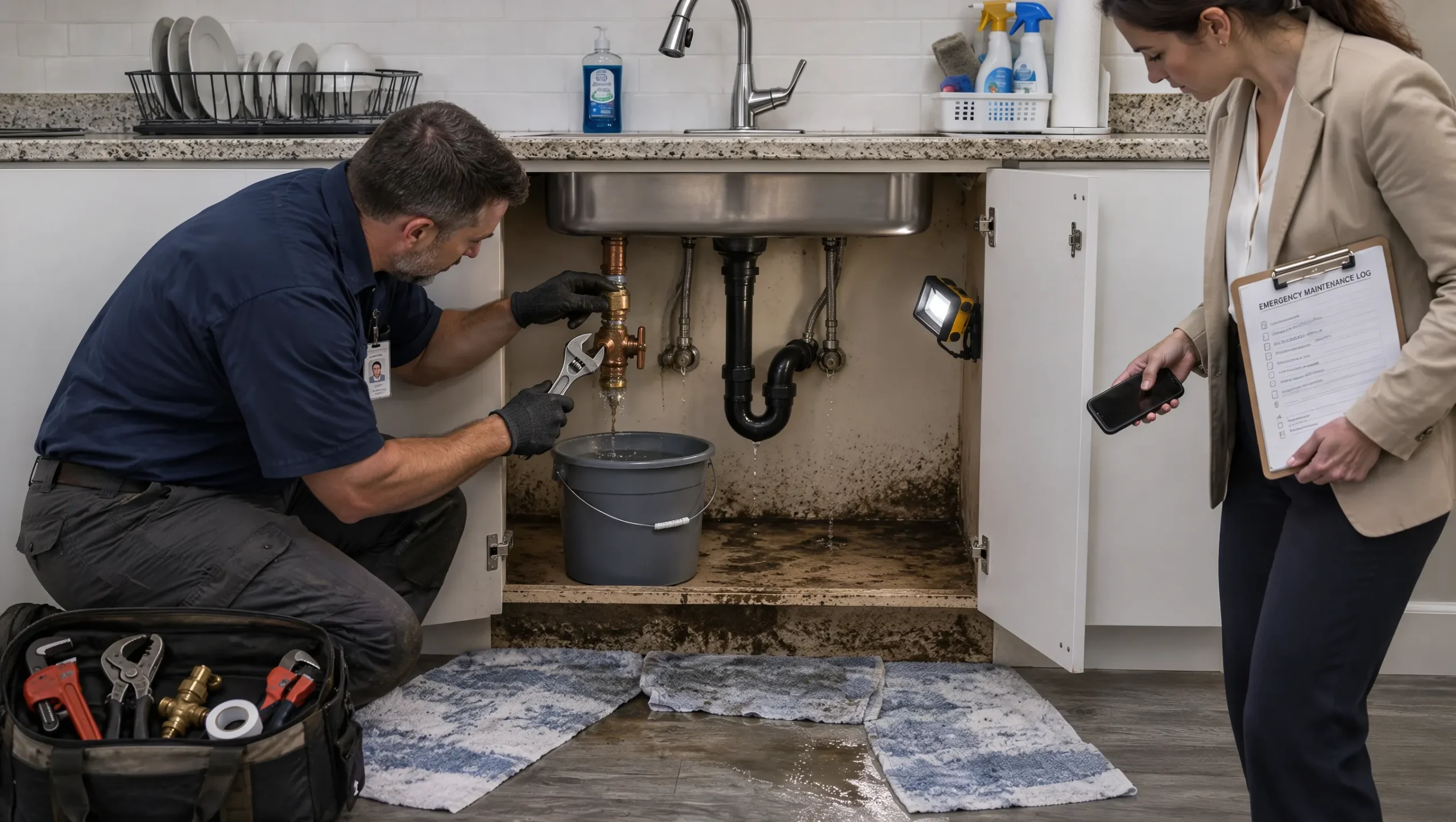
Act Quickly to Limit Water Damage
Burst pipes require a coordinated response that combines immediate safety measures, professional plumbing repairs, and thorough moisture control. Acting quickly can help protect the building, reduce repair costs, and limit disruption for tenants.
Review your emergency maintenance procedure, identify the main water shutoff location, and keep reliable plumbing contacts available. A prepared response can make a significant difference when a pipe bursts unexpectedly.